
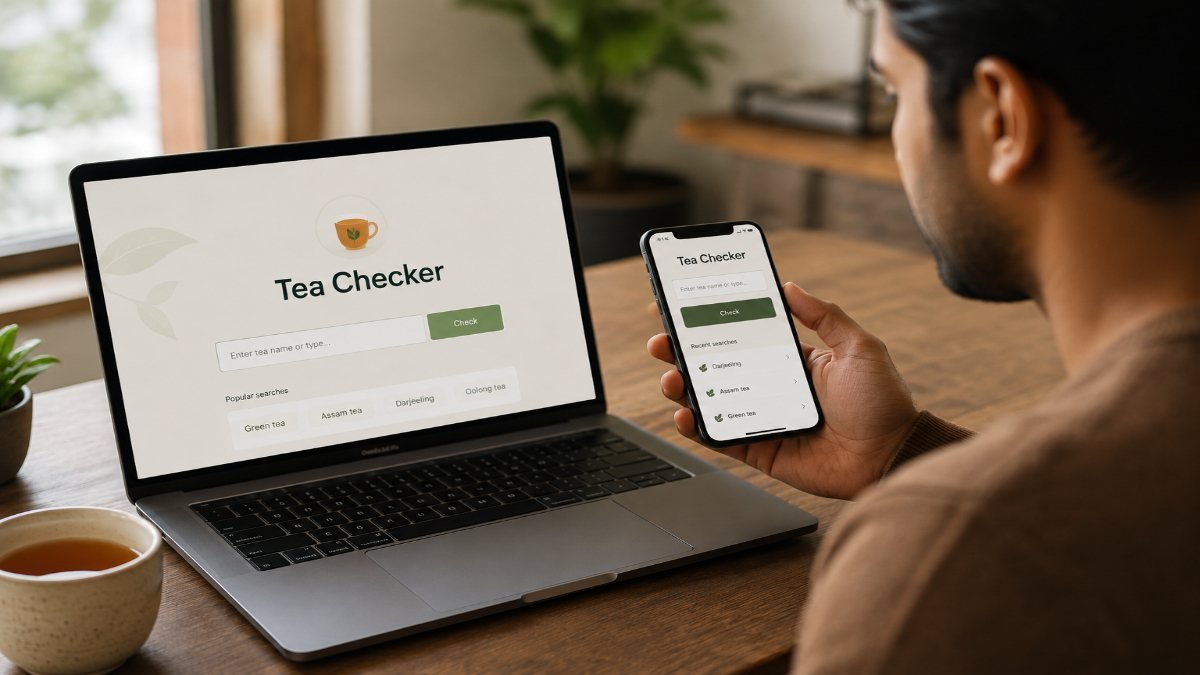
If you have searched for tea checkers, you have probably noticed that the results can be confusing. Several websites and apps use the term, but they do not necessarily offer the same service.
Most Tea Checker services are designed around one basic question: Can you find out whether a person or profile appears on the Tea dating-safety platform?
That sounds simple, but there are important differences between Tea, Tea Checker services, and traditional background-check websites. There are also questions about accuracy, privacy, pricing, and how much information a third-party service can actually verify.
This guide explains what a Tea Checker is, how these services generally work, what to look for before paying, and why a search result should be treated as information to investigate rather than automatic proof that a claim is true.
What Is Tea Checker?
A Tea Checker is generally a third-party service or app designed to help users search for information associated with the Tea dating-safety platform.
The term does not refer to one universal database or one official tool. Current search results show multiple services using similar Tea Checker names, including web-based services and apps with different search methods, pricing models, and policies.
Depending on the service, a Tea Checker may allow a user to submit information such as a name, phone number, city, age range, username, or photo. The service then attempts to identify a potentially matching profile or post.
Some services describe their results using categories such as:
- Found
- No record
- Possible match
- Uncertain match
The exact process depends on the provider.
That distinction matters because Tea Checker” should not automatically be treated as the name of one official Tea product.
What Is the Tea App?
To understand Tea Checker, it helps to understand the platform it is associated with.
Tea is a dating-safety and community platform focused on helping people make more informed decisions about dating. Its current website describes features including community reviews, profile and phone-number searches, background-screening tools, and other safety features.
The current Google Play listing for Tea Dating Advice describes a community where women can seek information about potential dates and access dating-related discussions and reviews. It also lists features such as nationwide posts and alerts.
In simple terms, Tea is the platform where dating-related information and community discussions can appear.
A Tea Checker is a separate service that attempts to help a person determine whether relevant information exists.
That is why the two names should not be confused.
Tea vs. Tea Checker
| Tea | Tea Checker |
| Dating-safety/community platform | Third-party lookup or search service |
| Hosts or provides access to dating-safety features | Attempts to locate relevant Tea information |
| Used as a community and safety resource | Used primarily for searching or checking |
| Operated by the Tea platform’s developer | Different services may be operated by different companies |
| Has its own privacy and data policies | Each checker has its own privacy and billing policies |
One particularly important point is that not every website using Tea Checker” in its name is necessarily affiliated with Tea. Some current Tea Checker listings explicitly describe themselves as independent services.
Why Do People Search for a Tea Checker?
People may search for a Tea Checker for several different reasons.
Someone may have heard that a dating-related post exists about them. Another person may simply want to understand what information is available before going on a date.
Common reasons include:
1. Checking your own online dating presence
A person may want to know whether their name, profile, or other identifying information appears on a dating-safety platform.
2. Investigating an unexpected change in dating activity
Someone might become concerned after matches disappear or plans change. However, a change in dating behavior alone does not prove that a Tea post exists.
A checker can potentially provide information, but it should not be used to turn speculation into certainty.
3. Understanding what information may be visible
People increasingly want to know what information about them is available across online platforms.
A Tea Checker can be one part of that investigation, although it should not be considered a complete picture of someone’s online presence.
4. Verifying a rumor
If someone says that a profile or post exists, a person may want to determine whether the claim has any basis.
The safest approach is to look for evidence rather than immediately assuming the rumor is true.
How Does a Tea Checker Work?
The exact process varies by provider, but many Tea Checker services follow a similar pattern.
Step 1: Provide Search Information
The service may ask for information that can help distinguish one person from another.
Depending on the provider, this may include:
- First name
- Phone number
- City
- Age range
- Username or social handle
- Photograph
- Other identifying information
Some services specifically advertise searches using a first name or phone number, with optional location and age filters.
The more identifying information a service requests, the more carefully you should review its privacy policy before submitting anything.
Step 2: The Service Searches for a Potential Match
The service then attempts to find information that matches the submitted details.
Different providers may use different methods.
For example, one service may describe a manually reviewed lookup, while another advertises a searchable or refreshed index.
Because the underlying methods can differ substantially, two Tea Checker services may produce different results.
Step 3: Review the Result
A result might indicate that a possible match was found, no matching record was located, or the information was not sufficient to make a confident determination.
This is where users should be especially careful.
A possible match is not automatically proof of identity.
Names can be shared by many people. Phone numbers can change hands. Photos can be reused. Cities can contain thousands or millions of residents.
A responsible service should make uncertainty clear instead of presenting every possible match as a confirmed identity.
What Information Can a Tea Checker Use?
There is no single standard because different services request different information.
Common search inputs can include:
| Search Input | Why It May Help |
| First name | Basic identity matching |
| Phone number | More specific identifier |
| City | Helps distinguish people with the same name |
| Age range | Provides another matching signal |
| Photo | May help identify a visual match |
| Username | Can help connect a profile |
| Additional context | Can reduce confusion between similar people |
Using several pieces of information together can potentially make matching easier.
However, users should avoid providing unnecessary personal information simply because a website requests it.
Before submitting sensitive information, check:
- Who operates the service?
- What information does it collect?
- Why does it need that information?
- How long is the information stored?
- Is it shared with third parties?
- Can you request deletion?
- What happens if you cancel?
- Does the service have a clear privacy policy?
Are All Tea Checker Services the Same?
No.
This is one of the most important things to understand when searching for tea checker.”
Current search results show several services using similar branding, but their features and business models can differ.
For example, one current service describes manually reviewed lookups with results delivered within 24 hours, while another describes instant searches and subscription-based access.
Other services advertise one-time search credits rather than subscriptions.
That means you should not assume that:
One Tea Checker service’s pricing, accuracy, cancellation policy, or privacy practices apply to another.
Always check the exact website or app you are considering.
Tea Checker Cost: What Should You Expect?
There is no universal Tea Checker price.
Current services advertise different models, including:
- One-time searches
- Search-credit packages
- Monthly subscriptions
- Other paid lookup options
For example, one Tea Checker service currently lists individual search credits and larger credit packages, while another advertises recurring membership options through its app.
Prices can also change.
Therefore, it is better to look at the current checkout page and billing terms instead of relying on an old review or social-media post.
Before paying, check these five things:
- Is the payment one-time or recurring?
- How many searches are included?
- Do unused credits expire?
- What happens if the search finds nothing?
- How do you cancel or request a refund?
This can prevent an unpleasant surprise later.
How Accurate Is a Tea Checker?
Accuracy is one of the biggest questions users should ask.
A Tea Checker may locate information that appears to match your details, but that does not automatically mean the information belongs to you.
For example, imagine that a search finds a person named Michael in Chicago.
That alone is not enough to establish identity.
A stronger match might involve several consistent signals:
- Name
- City
- Age range
- Photo
- Username
- Other identifying information
Even then, users should read the result carefully.
A good result should distinguish between:
Confirmed match:
The available information strongly corresponds to the person being searched.
Possible match:
There are similarities, but the information is not enough to establish identity confidently.
No record found:
The service did not locate a matching record during its search.
A no record” result should also be interpreted carefully.
It does not necessarily mean that nothing about you exists anywhere online.
It means that the particular service did not find a matching result within the information and access available to it.
Tea Checker Privacy: What Should Users Consider?
Privacy deserves as much attention as the search itself.
A Tea Checker may ask for information that is personally identifying. Depending on the provider, this can include a phone number, photograph, location, or other details.
Before using a service, read its privacy policy.
For example, the official Tea platform’s privacy information explains that users can share content about other individuals and that posted information can be visible to other users.
Third-party Tea Checker services have their own policies, so their practices should be evaluated separately.
Questions worth asking
Does the service store your information?
Find out whether submitted photos, names, phone numbers, or search results are retained.
Does it share information with third parties?
Look for explanations about vendors, analytics providers, payment processors, or other partners.
Can you request deletion?
A clear deletion procedure is a positive sign.
Is payment handled securely?
Use established payment systems and verify that the checkout page is actually associated with the service you intended to use.
Does the service explain its limitations?
A trustworthy service should not promise impossible accuracy.
Is Tea Checker Legit?
The answer depends on which Tea Checker service you mean.
There is no single company that automatically owns every website or app using the phrase Tea Checker.”
Current search results show multiple services using similar names and different operating models.
So instead of asking only:
Is Tea Checker legit?”
a better question is:
Is this specific Tea Checker service transparent, secure, and appropriate for what I need?”
Before using one, check:
- Official website
- Company or developer information
- Privacy policy
- Terms of service
- Pricing
- Cancellation policy
- Refund policy
- App-store information, if applicable
- Recent reviews
- Contact information
- Claims about accuracy
Google Play can also provide useful information about an app’s developer, update history, ratings, reviews, and declared data-safety practices.
Reviews should not be treated as absolute proof either. Look for patterns rather than relying on one extremely positive or negative comment.
What Should You Check Before Using a Tea Checker?
A few minutes of research can save you money and protect your personal information.
1. Confirm the exact website
Similar names can make it easy to visit the wrong service.
Check the domain carefully before entering personal information or payment details.
2. Read the pricing page
Do not assume a low introductory price means the entire service is that price.
Look for recurring billing, credit systems, renewal terms, and cancellation instructions.
3. Read the privacy policy
Pay particular attention to information about photographs, phone numbers, search history, and data retention.
4. Check the company’s identity
A professional service should provide enough information for users to understand who operates it and how to contact support.
5. Look at recent reviews
Recent reviews can reveal problems involving billing, customer service, search quality, or cancellation.
6. Understand what the service actually searches
A checker cannot responsibly promise access to information that it cannot legally or technically obtain.
Be skeptical of claims that sound absolute.
What If a Tea Checker Finds a Match?
If a search produces a result about you, do not immediately assume every statement is accurate.
Take a calm, evidence-based approach.
First, determine whether the result actually matches you.
Then separate:
- Facts
- Opinions
- Allegations
- Personal experiences
- Incorrect information
- Information you cannot independently verify
A dating-safety post may represent one person’s experience or interpretation. It should not automatically be treated as an official determination of someone’s character.
If you believe content is inaccurate, abusive, or violates the platform’s rules, review the platform’s reporting, privacy, and dispute procedures.
Do not respond by harassing, threatening, or attempting to expose the person who posted it.
What If a Tea Checker Finds Nothing?
A clean result can be reassuring, but it should be interpreted accurately.
No result” generally means that the particular service did not identify a matching result based on its search process.
It does not guarantee that no information about you exists anywhere online.
Search coverage, indexing, access restrictions, spelling differences, incomplete information, and changes to online platforms can all affect results.
For that reason, avoid services that turn a simple search into an unrealistic guarantee.
Tea Checker vs. a Traditional Background Check
A Tea Checker and a traditional background-check service are not necessarily the same thing.
A traditional background check may focus on information such as public records, depending on the provider, purpose, jurisdiction, and applicable law.
A Tea Checker is generally focused on finding information associated with the Tea platform.
| Feature | Tea Checker | Traditional Background Check |
| Main purpose | Search Tea-related information | Investigate background information |
| Dating-community content | Potentially relevant | Usually not the primary focus |
| Public records | Not necessarily | May be included |
| User-generated content | May be relevant | Usually not the main focus |
| Search method | Depends on provider | Depends on provider |
| Accuracy | Depends on matching | Depends on records and provider |
| Privacy concerns | Personal search data | Personal and background information |
The two should therefore not be treated as interchangeable.
Common Tea Checker Mistakes to Avoid
Mistake 1: Assuming every Tea Checker is the official Tea app
They are not necessarily the same service.
Mistake 2: Paying before checking the billing model
Always determine whether the payment is one-time or recurring.
Mistake 3: Treating a name match as proof
A shared name does not establish identity.
Mistake 4: Uploading unnecessary personal information
Only provide information that is genuinely required for the service you choose.
Mistake 5: Believing every no result” means you are completely clear online
Search coverage is limited to what the service can access and match.
Mistake 6: Relying on one online claim
If a result could affect a serious personal decision, verify important information through appropriate sources.
FAQs
What is a Tea Checker?
A Tea Checker is generally a third-party service or app designed to help users search for information associated with the Tea dating-safety platform. Multiple services currently use similar Tea Checker branding.
Is Tea Checker the same as the Tea app?
No. Tea is the dating-safety/community platform, while Tea Checker generally refers to a separate lookup or search service.
Can a Tea Checker tell me if I am on Tea?
Some services specifically advertise searches intended to determine whether information associated with you appears on Tea. However, results depend on the specific service, its search method, available information, and matching accuracy.
How much does Tea Checker cost?
There is no single universal price. Current services advertise different models, including individual searches, credit packages, and subscriptions. Always check the current pricing and billing terms before paying.
Is Tea Checker free?
Some services may allow limited searching or browsing before payment, while others charge for the actual lookup. The exact model depends on the provider.
Does every Tea Checker service work the same way?
No. Some describe manual lookups, while others advertise automated or indexed searches. Their pricing, privacy policies, search coverage, and results can therefore differ.
Can a Tea Checker result be wrong?
Yes. Any identity-based matching system can potentially produce false matches or miss information. Names, locations, photos, and other details can be shared by multiple people.
Should I upload my photo to a Tea Checker?
Only if you are comfortable with the provider’s handling of that information and have reviewed its privacy policy. Check how photos are stored, processed, shared, and deleted.
Is Tea Checker a background check?
Not necessarily. A Tea Checker generally focuses on information associated with Tea, while traditional background checks may involve different types of records and searches.
What should I do if I find inaccurate information about myself?
First, document the result. Then review the relevant platform’s policies and available reporting, privacy, correction, or removal procedures. Avoid retaliating against the person who may have posted the information.
Final Thoughts
The phrase tea checker can refer to more than one service, which is why researching the exact provider matters.
At its core, a Tea Checker is intended to help users investigate whether information associated with them or another search subject appears on the Tea dating-safety ecosystem. But the quality of the result depends on the service’s search method, available information, matching process, and limitations.
The safest approach is to look beyond the marketing.
Check the provider’s identity, pricing, privacy policy, billing terms, search methodology, and limitations before submitting personal information. And if a result appears, treat it as information that may require context and verification rather than automatic proof. For anyone using online dating, the larger lesson is simple: digital safety tools can provide useful context, but no single search should replace careful judgment, privacy awareness, and responsible verification.